


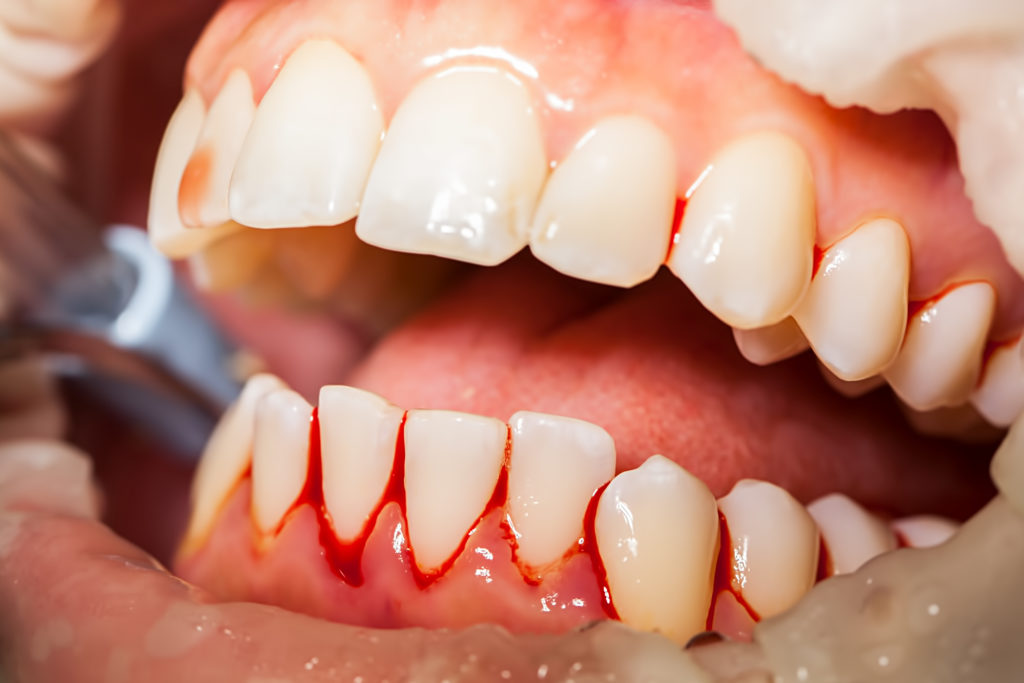
Because you know that it’s essential to your oral health, you’ve been flossing. But you’ve noticed that, while cleaning, your gums bleed. This may have left you wondering, “Am I doing something wrong?” There can be several contributors to gum bleeding, but to be on the safe side, it’s best to consult a dentist in Upper Arlington. Continue reading to learn what can be done to stop the bleeding and protect your long-term oral health.
The Possible Causes of Your Bleeding Gums
If you’ve recently started flossing your teeth, then it’s not uncommon for there to be slight gum bleeding at first, but it should stop quickly. So instead of abandoning your routine, you should forge ahead and continue so that your gums can adjust to the new habit.
If the bleeding persists, it could be an indicator of plaque buildup along the gumline and between the teeth. Plaque is a sticky substance that forms when oral bacteria feed on sugars and starches in your mouth. Because it can rapidly form, it’s necessary to floss daily. Otherwise, plaque can develop into a hard layer of calculus that can sink beneath the gumline and cause the formation of bacteria-filled pockets. This is considered the first stage of periodontal (gum) disease (also referred to as gingivitis).
How Gum Disease Can Be Treated
To prevent any guessing, you should visit a local dentist when you notice any gum bleeding. If it is determined that you have gum disease, there are several treatment options available.
Depending on your situation, here’s what your dentist may recommend:
- Oral Hygiene Improvements – Your dental team may provide tips and product recommendations to help you maintain a clean mouth.
- Scaling and Root Planing – This is a two-step procedure that involves removing plaque from beneath the gumline and smoothing the tooth roots to prevent any future bacterial growth.
- Antibiotic Therapy – Antibiotic medical can be applied to kill any oral bacteria that may have spread.
For more advanced cases of gum disease, your dentist may refer you to a specialist (periodontist).
The Sooner You Act, the Better
One of the best defenses for gum disease is proactivity. Thus, the quicker you seek care when you notice any gum bleeding, the better off you’ll be. In most cases, you can avoid the more complex forms of treatment, save money, and prevent unnecessary suffering. In addition, you can get valuable tips on how to prevent such problems in the future. Therefore, you can maintain a healthy, attractive and functional smile.
Q&A About Bleeding Gums
Besides Gum Disease, What Can Cause Bleeding Gums?
It is possible that you are using incorrect brushing and flossing techniques. For example, using a hard-bristled toothbrush can irritate sensitive oral tissues. Snapping your floss between your teeth (rather than gently guiding it) can also be a contributor.
What Are Symptoms of Gum Disease Other Than Bleeding Gums?
Bad breath, gum recession, pus, and a foul taste in your mouth are all potential signs of gum disease. Your gums may also be red and swollen, rather than pink and firm.
Does a Water Flosser Cause Less Bleeding than Regular Floss?
If you struggle to be gentle when you floss, or you have a medical condition that makes flossing difficult, you can try a water flosser. It uses gentle, pulsating water to clean between the teeth, and it may cause less bleeding and irritation than traditional string floss. However, if you can use string floss, it is ultimately more effective at plaque removal.
Meet the Practice
Dr. Angela Courtney earned her dental degree from the Ohio State University College of Dentistry. A true perfectionist who desires to provide the absolute best care, she has received additional postgraduate training from the world-renowned Las Vegas Institute for Advanced Dental Studies. If you are concerned about bleeding gums or other issues related to your oral health, she would be pleased to serve you. Schedule an appointment by contacting Artistry Smile Center in Columbus at 614-541-7593.